

Giant Tortoises of the Galapagos

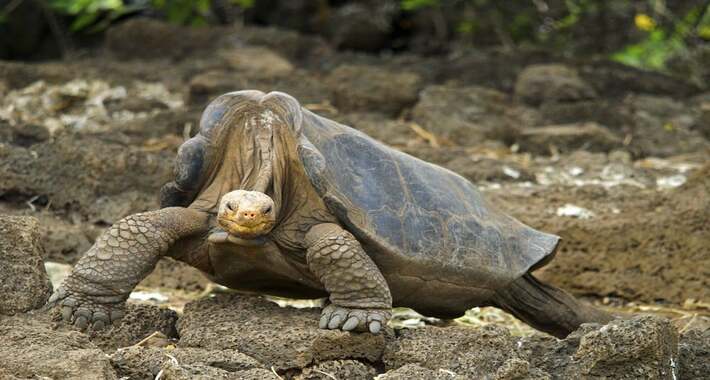
There’s a good reason why the Galapagos Giant Tortoise is arguably the most well-known creature in the islands. These enormous reptiles may reach 550 pounds in weight and easily last 150 years in the wild. It is the biggest reptile in the world and the longest living vertebrate, yet it is also one of the rarest.
With the exception of Antarctica and Australia, giant tortoises formerly inhabited every continent. Sadly, nowadays, only two populations of a few thousand gigantic tortoises remain, one in the African island of Seychelles and the other in the Galapagos Islands. In comparison, the number of gigantic tortoises that formerly called the Galapagos Archipelago home was estimated to be a quarter of a million, but it has now dropped to 3,000. The precise reason of their nearly complete extinction remains unknown to scientists, but it is certain that it is linked to the presence and expansion of humans—this being especially true for those living in the Galapagos Islands.
Origins
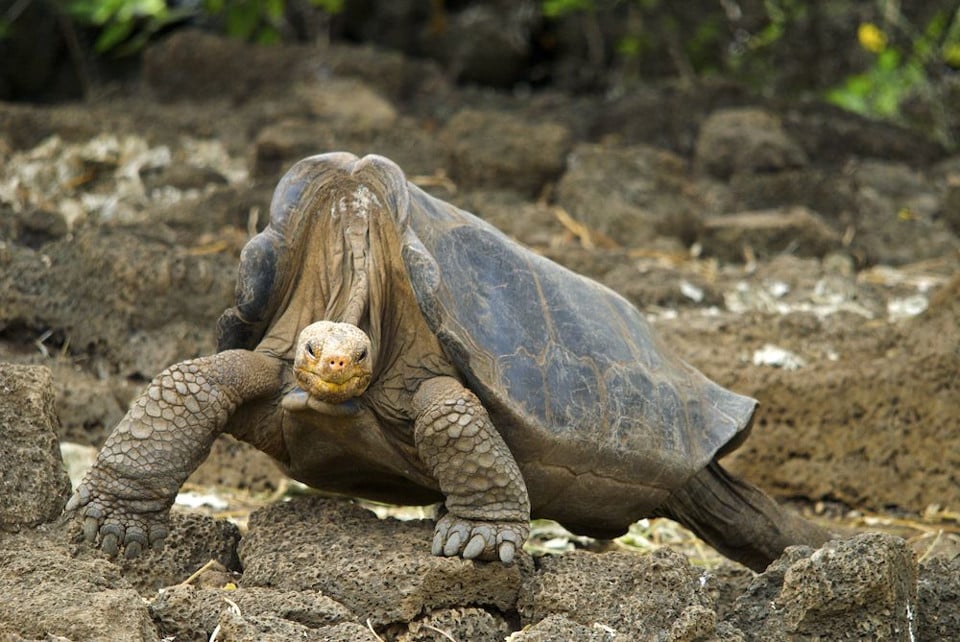
Lonesome George (photographed before to his 2012 death)
The process known as island gigantism, which is really very frequent among island populations, is responsible for the emergence of the Galapagos giant tortoise. Most experts agree that the earliest tortoises to arrive in the archipelago were around the size of a typical tortoise. But the tortoises developed to enormous sizes years after they arrived on the islands, practically unconstrained by a near-total absence of predators and little competition. They benefit greatly from their exceptionally big size, which also makes them more suited to survive in unstable environments like the Galapagos. The tortoises can last more than a year without food or fresh water because of their big size, which also allows them to store more water and fat for protection during times of shortage (they have a special water-storing region in the root of their neck). In addition, their modest surface-area-to-volume ratio makes it easier for them to swim between islands, allowing them to increase the size of their habitat. They are also better at controlling their body temperature.
On your upcoming voyage aboard Yacht La Pinta, behold the Galapagos Giant Tortoise!
Conduct
When a little bird perches on the gigantic tortoise shells in the Galapagos, tourists are frequently enchanted and make for the ideal snapshot. But in reality, this is a significant aspect of the mutualistic connection that exists between giant tortoises and Galapagos birds. Upon landing atop the tortoise’s shell, Vermillion Flycatchers and Darwin’s Finches frequently start pecking at insects that are hiding in the crevices. Also, they are spotted circling in front of the tortoises to attract their attention. Once they have, the tortoise would extend its neck or other limbs to let the bird acquire ticks that are otherwise inaccessible locations. In this manner, the tortoise receives a complimentary wash and the bird receives a complimentary supper.
Observe Giants Galapagos turtles feasting on a variety of flora in the elevated regions of Santa Cruz Island.
Galapagos giant tortoise adaptation and natural selection
After once inhabiting 14 or 15, there are now just 11 subspecies of Galapagos giant tortoises left in the archipelago. Nonetheless, the tortoises are often classified into two families: saddleback and domed shell tortoises. In the actual Galapagos Islands, the habitat in which the tortoises reside determines whether they belong to either of these groups. Compared to tortoises living on islands with greater amounts of precipitation, those on islands with lower rainfall rates are smaller. They also differ from domed shell tortoises in that their shells are saddleback-shaped, raised over their necks and rear legs, and their limbs are thinner and longer.
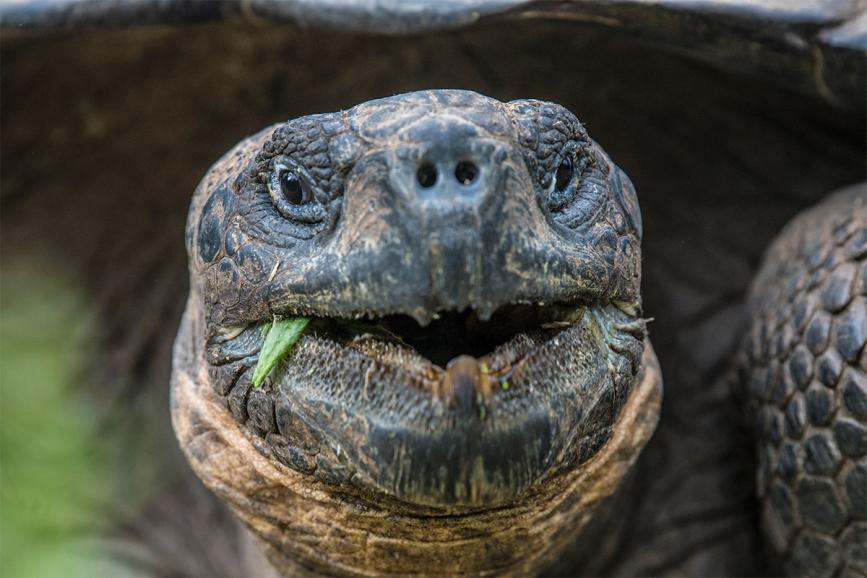
The Galapagos Islands are home to several species of giant tortoises
The environments that tortoises inhabit are closely related to these remarkably distinctive characteristics. Dryer islands have far less vegetation overall, and what’s more, it’s usually higher up. Cacti, for instance, are among the most prevalent plant species and bear fruit toward the top of the plant. Because of its long legs and capacity to raise its neck upward, the tortoise that can reach higher and gather more fruit is therefore healthier and more likely to reproduce. It’s interesting to note that several subspecies on different islands have adapted to these two traits, demonstrating how successful this adaptation has been. Conversely, the Santa Cruz highlands, home to hundreds of domed shell tortoises, are abundant in lush vegetation and flora. Therefore, the saddleback shell serves no use and exposes the tortoises to further danger from predators.
Here is additional information about the Galapagos Giant Tortoise.
RELATED STORIES
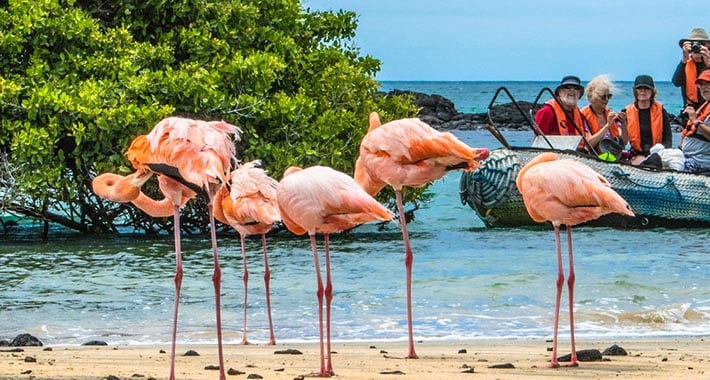
What are the best birds to see in the Galapagos?

Six Stunning Ways Galapagos Island Animal Mothers Nurture Their Young

Guy Fawkes on the Galapagos Islands: Never forget the November “Finch”…
A Unique 6-Day Insular Inspiration Session with Charles Darwin on Santiago Island!

Just now, this arrived! On Fernandina Island, the La Cumbre Volcano is now erupting!